


 By Charles Szumski (Paris,France)
Each autumn, the hills of Montmartre in Paris transform into a living theatre of culture, flavour, and conviviality. The Fête des Vendanges de Montmartre — Paris’s iconic harvest festival — brings together over 600,000 visitors every year for three days of music, gastronomy, and shared heritage. Amidst the laughter, wine, and colourful parades of the 18th arrondissement, a small corner of Korea has quietly become a recurring presence: the Korean Foundation for Cultural Exchange (KFCE) and the City of Andong, introducing the heart of Korean ancestral culture to Europe through the taste of its jonggajip cuisine — the refined dishes of Korea’s noble households.
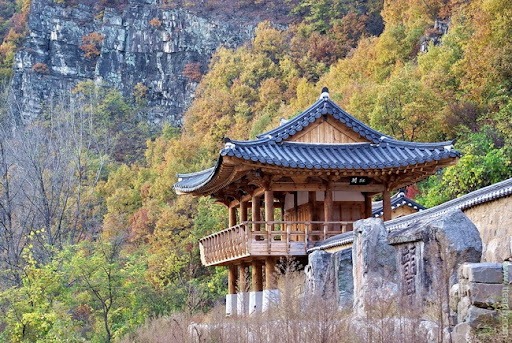
Over the past five years, Andong’s participation — supported by the KFCE (www.kfce.or.kr) — has evolved from research and observation to full-scale engagement, including two years of field studies and hands-on exhibitions at the festival’s “Parcours du Goût” (Taste Trail). Through this sustained involvement, Andong has positioned itself not only as a city of Confucian heritage and ritual but also as a living bridge between tradition and tourism — a model for how culinary diplomacy can extend a city’s cultural identity beyond borders.
A Meeting of Two Cultural Landscapes
The Montmartre Harvest Festival, founded in the 1930s to celebrate the rebirth of Paris’s last vineyard, has become one of the city’s most beloved popular events. Beneath the shadow of the Sacré-Cœur, more than 160 stands line the cobbled streets, representing regions and countries from across the globe. Wine producers from Burgundy and Alsace mingle with artisanal cheesemakers, olive growers from Provence, and — since 2020 — cultural envoys from Andong, Korea’s “capital of spiritual culture.”
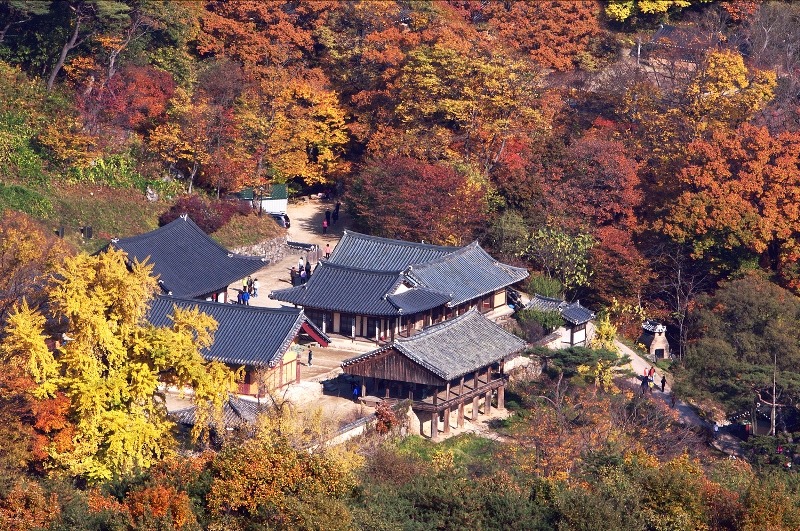
Andong, located in the Gyeongsangbuk-do province of southeastern Korea, is widely regarded as the country’s repository of Confucian traditions, with its cluster of historic jongga households — multi-generational noble families that preserve rituals, calligraphy, and cuisine dating back to the 15th and 16th centuries. Among these lineages, the Gwangshin Kim Clan has recently gained international attention for its preservation of Suwun Japbang, a 500-year-old culinary text that has passed Korea’s final review for UNESCO Memory of the World nomination.
Through the partnership between the KFCE and Andong City, visitors to Montmartre have been able to experience not only ancient recipes but also the philosophy that underpins them: a worldview in which food is not simply nourishment but a moral act, harmonising body, mind, and community.
Five Years of Dialogue through Taste
The KFCE’s engagement in the Fête des Vendanges was not accidental; it was the result of a five-year programme combining research, diplomacy, and design.
During the initial two years, the Foundation conducted comparative studies of European festival structures, visitor flows, and culinary curation methods to understand how Andong’s heritage could be meaningfully contextualised in a Western festival environment.
Subsequently, the team launched full participation in the festival, operating a booth that offered visitors a multisensory encounter: live demonstrations of traditional Korean table settings, documentary screenings on Andong’s Confucian academies (Seowon), and tastings of jonggajip dishes paired with Parisian wines.
One of the highlights in 2023 was the introduction of Andong Jjimdak, a slow-cooked soy-based chicken dish adapted from traditional household recipes, alongside the Andong Soju distillation heritage presentation — showing the continuum between domestic culinary practices and national intangible heritage.
In 2024, the focus shifted toward “Jesa Cuisine” — the ritual food prepared for ancestral memorial ceremonies — allowing European audiences to understand how the aesthetic of Korean food is deeply tied to ethics, reverence, and seasonal harmony.
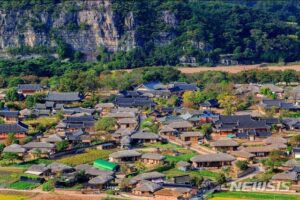
These initiatives have had measurable impact: local French media and culinary schools have shown growing interest in Korean traditional gastronomy; several chefs in Paris and Lyon have visited Andong to study fermentation techniques; and the city has been featured in Le Monde Gastronomie and Figaro Vin as a model of sustainable cultural tourism.
Cultural Tourism and the New Diplomacy of Food
Andong’s participation at Montmartre illustrates a broader global trend — the convergence of heritage and tourism through gastronomy. In recent years, food has become a new axis of international cultural relations, a “soft power” tool capable of conveying history, craftsmanship, and identity more effectively than formal diplomacy.
For Andong, the strategy goes beyond branding: it situates the city’s intangible assets — ritual traditions, Confucian academies, family archives — within a living ecosystem that attracts both scholars and travellers. By introducing authentic jonggajip cuisine to the European public, Andong is not exporting a commercial product but rather inviting dialogue on values: respect for ancestry, communal balance, and the continuity of culture in a rapidly changing world.
As Mr. KIM Jooho, amanger to the project,
“What we bring to Paris is not simply Korean food; it is a living conversation between civilizations — one that begins with taste but leads to empathy and understanding.”
This ethos aligns seamlessly with the spirit of the Montmartre festival itself: a celebration of terroir, creativity, and human connection.
A Model for Future Collaboration
The success of Andong’s presence at the Fête des Vendanges has already inspired discussions about future cultural cooperation between French and Korean municipalities.
Several French regional councils have expressed interest in reciprocal exchanges — for example, inviting Korean culinary artists to rural gastronomy fairs in Provence, or co-hosting workshops on fermented foods and wine culture.
Meanwhile, the KFCE is planning to expand the initiative into a “Cultural Routes of Taste” programme linking Andong with European heritage cities that share similar values of preservation and hospitality.
This would echo the EU’s Cultural Routes network and potentially be supported under UNESCO’s “Creative Cities of Gastronomy” framework.
Through these continued exchanges, Andong hopes to redefine the role of regional culture in the 21st century — not as a static relic, but as a dynamic resource that fosters cross-cultural learning, innovation, and empathy.
Conclusion: A Shared Table between Continents
As Parisians gather this October amid the vineyards of Montmartre, the aroma of aged wine will mingle with the subtle fragrance of soy, sesame, and pear from Korea’s ancient kitchens.
In that fleeting convergence of flavours and histories lies something profound: a recognition that cultural heritage, when shared sincerely, transcends geography and time.
For the people of Andong, this participation is not an isolated event but the culmination of decades of dedication to safeguarding Korea’s “spiritual culture.”
For the citizens of Paris, it is an invitation — to discover that beneath the colourful bustle of the festival, there exists a quiet dialogue between East and West, between memory and modernity, between the art of making wine and the art of preserving wisdom through food.
In the end, the partnership between Andong and Montmartre shows that the future of cultural diplomacy may not be negotiated in meeting rooms, but at shared tables — where history is tasted, not merely told.